Traveling opens doors to new adventures, cultures, and experiences that enrich our lives in profound ways. Yet, it often comes with its own set of challenges: long flights that leave you stiff and foggy-headed, unfamiliar time zones disrupting your sleep, or the constant hustle of navigating airports and city streets. In these moments, maintaining a sense of calm and presence can feel elusive. That’s where yoga steps in as your ultimate travel companion. This ancient practice isn’t just for studio mats or serene retreats; it’s adaptable, portable, and powerful for keeping you grounded amid the chaos of the road.
In this article, we’ll explore how to weave yoga into your travels seamlessly. Whether you’re a backpacker hopping hostels or a business traveler zipping between meetings, these strategies will help you stay centered. We’ll cover practical routines, targeted poses for common travel aches, and mindfulness techniques to enhance your journey. By the end, you’ll have a toolkit to turn potential stressors into opportunities for renewal. Let’s dive in and discover how yoga can transform your next trip.
Why Yoga Fits Seamlessly into a Traveler’s Life
Yoga’s beauty lies in its flexibility, much like the journeys we embark on. Unlike gym workouts that require equipment or space, yoga relies on your body, breath, and mind. For travelers, this means no excuses: you can practice in a 10-foot hotel room, a quiet park bench, or even your airplane seat.
The Science-Backed Benefits for Jet-Setters
Research shows yoga reduces cortisol levels, the hormone behind stress, which spikes during travel delays or culture shock. A study from the Journal of Alternative and Complementary Medicine found that even 20 minutes of yoga daily improves sleep quality, crucial when crossing time zones. It also enhances flexibility, countering the stiffness from hours in economy seats, and boosts circulation to combat swelling in your legs or feet.
Beyond the physical, yoga fosters mental resilience. Breathwork calms the nervous system, helping you handle lost luggage with grace rather than frustration. Over time, a consistent practice builds emotional stability, turning you into a more mindful explorer who savors sunsets in Santorini or street food in Bangkok without the weight of worry.
Overcoming Common Barriers
Many travelers worry about time or space constraints. The good news? You don’t need an hour-long session. Micro-practices, like a five-minute sun salutation at dawn, yield big results. And forget bulky mats; a thin travel towel or the hotel carpet works fine. Start small, and soon yoga becomes as routine as packing your toothbrush.
Crafting Your Portable Yoga Toolkit
To make yoga a non-negotiable part of your trip, preparation is key. Think of your routine as a lightweight suitcase: pack only what serves you.
Essentials to Pack (or Skip)
Opt for minimalism. A foldable yoga mat under two pounds is ideal for longer trips, but for short jaunts, use the floor or a sarong. Include resistance bands for added strength if space allows. Download apps like Down Dog or Insight Timer for guided sessions offline. Journaling supplies? A small notebook to reflect on poses and how they shift your mood during travel.
Designing a Flexible Daily Routine
Aim for consistency over perfection. Structure your week like this:
- Mornings (10-15 minutes): Energize with standing flows to shake off sleep inertia. This sets a positive tone, especially in new environments.
- Midday (5 minutes): Quick breath breaks during layovers or sightseeing pauses. It recharges without derailing your schedule.
- Evenings (20 minutes): Wind down with restorative poses to process the day’s stimuli and prep for restful sleep.
Tailor to your energy: On hiking days, focus on hip openers; after cultural tours, emphasize neck stretches. Track progress in your journal: “Day 3 in Rome: Warrior pose helped me feel empowered amid the crowds.”
Targeted Poses to Tackle Travel Discomforts
Yoga shines in addressing specific travel gripes. Here’s a curated selection of poses, each with step-by-step instructions. Practice them mindfully, holding for 5-10 breaths unless noted.
Easing Jet Lag and Fatigue
Jet lag disrupts your circadian rhythm, leaving you wired yet weary. Counter it with forward folds to calm the mind.
Child’s Pose (Balasana): Kneel on the floor, big toes touching, knees wide. Fold forward, arms extended, forehead to the ground. This gentle inversion releases tension in the back and hips, promoting deep relaxation. Modify on a plane by draping over your tray table.
Legs-Up-the-Wall (Viparita Karani): Lie on your back near a wall, legs extended upward. Scoot your hips close for support. This inverts blood flow, reducing leg swelling and signaling rest to your body. Perfect for hotel rooms; use pillows under your hips if needed.
Relieving Aches from Cramped Spaces
Long hauls mean tight muscles. Open up with these.
Seated Forward Bend (Paschimottanasana): Sit tall on the edge of your seat, feet flexed. Hinge at the hips to fold forward, hands on shins or floor. It stretches the spine and hamstrings, easing lower back pain from upright postures. In transit, do it cross-legged.
Cat-Cow Flow (Marjaryasana-Bitilasana): On all fours (or seated), alternate arching and rounding your spine with inhales and exhales. This mobilizes the vertebrae, countering the forward hunch from scrolling maps. Repeat 5-8 times for instant relief.
Supporting Digestion and Immunity
Irregular meals and water changes can upset your gut. Twists aid detoxification.
Seated Spinal Twist (Ardha Matsyendrasana): Sit with legs extended, bend right knee over left, place left elbow outside right thigh. Twist gently, gazing over your shoulder. Switch sides. This massages organs, improving digestion after heavy airport fare. Do it post-meal for better absorption.
Bridge Pose (Setu Bandhasana): Lie on your back, feet hip-width, knees bent. Lift hips, interlace hands under back. It strengthens the core and stimulates the thyroid for immune support, vital when exposed to new germs.
Incorporate these into a 15-minute sequence: Start with Cat-Cow, flow to twists, end with Legs-Up-the-Wall. Over a week, you’ll notice less bloating and more vitality.
Yoga in Action: Adapting to Travel Scenarios
One size doesn’t fit all trips, so let’s adapt yoga to real-world settings.
Airports and Layovers: Micro-Movements Matter
Airports are limbo zones of fluorescent lights and fast food smells. Use gate areas for discreet practice.
- Airplane Seat Yoga: In your seat, do ankle circles, seated twists, and eagle arms (cross one arm over the other, bend elbows, lift forearms). These prevent deep vein thrombosis and release shoulder knots without drawing stares.
- Terminal Flow: Find a quiet corner for a standing sequence: Mountain Pose to Chair to Warrior I. It grounds you amid announcements, taking just three minutes.
Pro tip: Set phone reminders for “breath breaks” every hour. Inhale for four counts, hold four, exhale four. This anchors you when delays mount.
Hotel Rooms and Hostels: Making Space Sacred
Confined quarters? Get creative.
- Bed-Based Routine: Use the mattress for supported poses like Supine Twist (knees to chest, drop to one side). It’s gentle on joints after walking tours.
- Wall Work: Press palms against the wall for Downward Dog variations or shoulder stretches. Ideal for solo travelers craving connection to stability.
In shared hostels, earbuds with soft chants create a personal sanctuary. Dim lights and essential oils like lavender amplify the calm.
Outdoor Adventures: Nature as Your Studio
Beaches, trains, or rental cars offer unique backdrops.
- Beach Bliss: On sand, try Pigeon Pose for hip release after swims. The ocean’s rhythm syncs with your ujjayi breath.
- Train Travels: Reclined Bound Angle (lie back, soles together, knees wide) uses the seat’s recline for heart-opening relief.
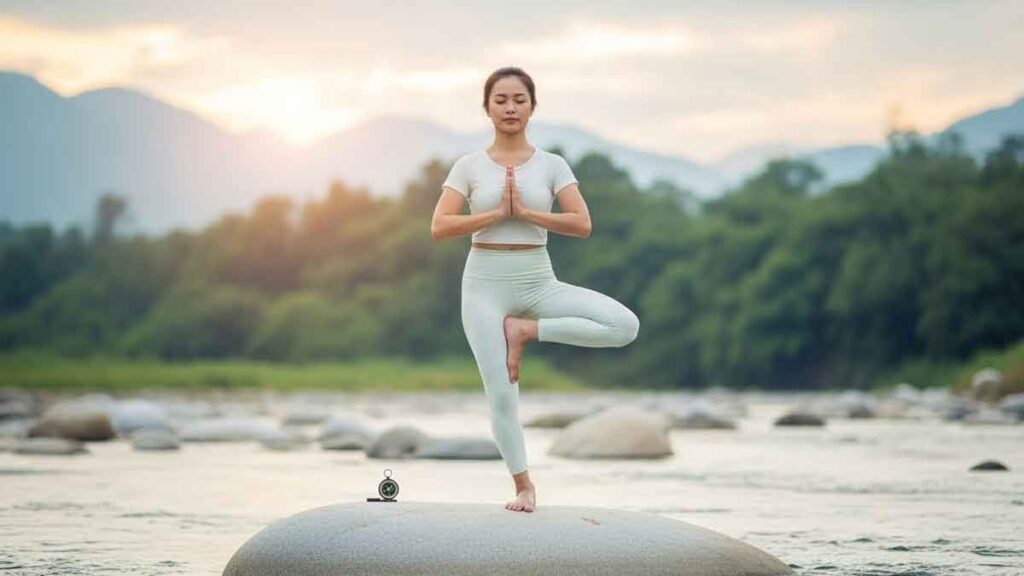
- Road Trips: Pull over for Tree Pose (balance on one foot, other on calf) to sharpen focus before driving.
Always respect surroundings: In cultural sites, opt for seated practices to honor the space.
Breathwork and Mindfulness: The Invisible Anchor
Poses are powerful, but breath is yoga’s secret weapon for travel mindset.
Simple Techniques for Instant Calm
4-7-8 Breathing: Inhale for four, hold seven, exhale eight. Use during turbulence or traffic jams to activate the parasympathetic response.
Alternate Nostril Breathing (Nadi Shodhana): Close right thumb to right nostril, inhale left; close left ring finger to left nostril, exhale right. Repeat. It balances hemispheres, clearing travel-induced brain fog.
Pair with mindfulness: During waits, scan your body for tension, then visualize roots growing from your feet into the earth. This “grounding” technique, rooted in yoga philosophy, fosters presence wherever you roam.
Long-Term Mindset Shifts
View travel as a yoga metaphor: Each delay a chance to surrender, each discovery a peak pose. Journal prompts like “What challenged my balance today, and how did breath restore it?” deepen insights. Over trips, you’ll cultivate equanimity, turning wanderlust into inner peace.
Integrating Yoga into Your Bigger Travel Picture
Don’t isolate yoga; let it enhance your itinerary. Pair morning sun salutations with coffee rituals for a soulful start. After hikes, restorative holds aid recovery. For group trips, lead partner poses like assisted forward folds to bond.
Sustainability note: Choose eco-friendly mats and support local yoga classes abroad. This aligns practice with conscious travel, amplifying joy.
In essence, yoga for travel isn’t about perfection; it’s about presence. As you pack your bags next time, remember: Your body is the ultimate vehicle. Nurture it, and the road unfolds with grace.
FAQ
Can beginners start yoga while traveling?
Absolutely. Begin with 5-minute guided videos focusing on breath and gentle stretches. Apps offer modifications, and consistency builds confidence faster than you think.
What if I have limited space or time?
Prioritize seated or standing poses. Even one minute of deep breathing counts. Remember, quality trumps quantity; a mindful minute outshines a rushed hour.
How does yoga help with travel anxiety?
It lowers heart rate and quiets racing thoughts via the vagus nerve. Poses like Child’s Pose signal safety to your brain, reducing fight-or-flight responses over time.
Is a yoga mat necessary for on-the-go practice?
Not at all. Use towels, grass, or bare floors. If investing, pick ultralight options under 1 kg for ease.
Can yoga improve my sleep abroad?
Yes, evening routines with dim lights and forward folds promote melatonin release. Avoid screens pre-practice for deeper rest despite jet lag.