
In a world that moves at breakneck speed, finding moments of true stillness can feel like a luxury. Enter restorative yoga: a gentle practice that invites you to pause, unwind, and reconnect with your body in the most nurturing way possible. Unlike the dynamic flows of vinyasa or the strength-building holds of hatha, restorative yoga is all about surrender. You support your body fully with props, allowing gravity and time to do the work of release. Whether you are recovering from injury, battling chronic stress, or simply craving deeper rest, this practice offers a sanctuary for healing.
Over the next 1500 words or so, we will explore the essence of restorative yoga, uncover its profound benefits, and break down some key poses you can try today. By the end, you will have actionable steps to weave this restorative magic into your life, plus answers to those nagging questions that keep you from starting. Let us dive in and discover how a few supported poses can transform your well-being.
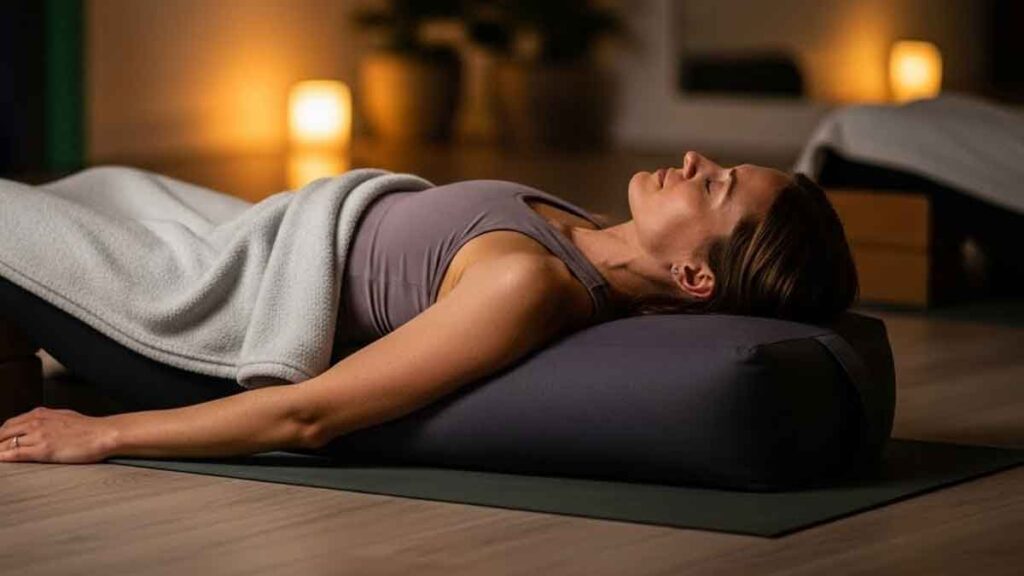
What is Restorative Yoga?
Restorative yoga emerged in the mid-20th century, pioneered by teachers like B.K.S. Iyengar, who emphasized props to make yoga accessible to everyone. It draws from the ancient yogic principle of pratyahara, or sensory withdrawal, encouraging you to turn inward without effort. Sessions typically last 45 to 90 minutes, with poses held for five to twenty minutes each. The focus is not on flexibility or endurance but on creating an environment where your nervous system can shift from fight-or-flight to rest-and-digest.
What sets it apart from other styles? Active yoga builds heat and challenges the muscles, while restorative prioritizes ease. You might spend an entire class in just four or five poses, propped up with blankets, bolsters, and blocks to mimic the shape of an embrace. This makes it ideal for beginners, seniors, or anyone with limited mobility. No prior experience required; just curiosity and a willingness to let go.
The Science Behind Restorative Yoga
At its core, restorative yoga taps into the parasympathetic nervous system, the branch responsible for recovery and calm. When you hold a supported pose, your body signals safety, reducing cortisol (the stress hormone) and boosting feel-good chemicals like GABA and serotonin. Studies from places like the University of California show that even short sessions can lower blood pressure and heart rate, mimicking the effects of deep sleep.
On a physical level, it enhances circulation without strain, delivering oxygen-rich blood to tissues that need it most. For those with insomnia, the prolonged holds promote melatonin production, easing you into slumber. Emotionally, it fosters mindfulness, helping process stored tension from daily life. Think of it as a reset button for your entire being: body, breath, and mind aligned in quiet harmony.
Key Benefits of Restorative Yoga
The perks of restorative yoga extend far beyond the mat, touching every aspect of health. Here are some standout advantages, backed by its gentle, cumulative nature.
Stress Reduction and Anxiety Relief
Chronic stress keeps us wired, but restorative yoga flips the script. By encouraging slow, deep breathing in supported positions, it activates the vagus nerve, which dials down anxiety. Practitioners often report feeling lighter after just one session, with long-term benefits building over weeks. If deadlines or family demands leave you frayed, this practice offers a daily dose of peace.
Improved Sleep Quality
Struggling to unwind at night? Restorative yoga is a natural sleep aid. Poses like legs-up-the-wall increase blood flow to the brain while calming the mind, often leading to faster sleep onset and fewer awakenings. Aim for an evening routine, and you might notice mornings feeling brighter.
Pain Management and Injury Recovery
For back pain, fibromyalgia, or post-surgery healing, the prop-supported holds reduce pressure on joints and muscles. Gravity gently stretches fascia (the connective tissue web), easing tightness without force. Unlike painkillers, this builds resilience, teaching your body to self-regulate discomfort.
Enhanced Emotional Resilience
In a supported forward fold, emotions can surface safely, like tears or sighs of relief. This release strengthens emotional boundaries, fostering greater self-compassion. Over time, you cultivate a toolkit for handling life’s ups and downs with grace.
Boosted Immunity and Digestion
The rest-and-digest mode restorative yoga triggers supports gut health and immune function. Gentle inversions aid lymphatic drainage, flushing toxins, while abdominal relaxation soothes digestive woes like bloating or IBS.
Incorporating this practice twice a week can yield noticeable shifts in energy and mood, making it a cornerstone for holistic wellness.
Essential Healing Poses in Restorative Yoga
Ready to get started? These five poses form a solid foundation. Gather props: two to four blankets, a bolster or firm pillow, a yoga block, and an eye pillow if you like. Practice in a quiet space, dim the lights, and set a timer for each hold. Breathe naturally, and exit slowly if anything feels off.
Child’s Pose (Balasana Variation)
This grounding pose cradles the torso, releasing the lower back and hips. Fold a blanket into a rectangle and place it lengthwise on your mat. Kneel with knees wide, big toes touching, and fold forward over the blanket, arms extended or by your sides. Rest your forehead on the prop or a block for neck support. Hold for 8-10 minutes.
Benefits: Calms the mind, eases sciatica, and soothes menstrual cramps. It invites introspection, melting away mental clutter.
Supine Twist (Supta Matsyendrasana)
Lie on your back, hug one knee to your chest, then guide it across your body with the opposite hand. Extend the bottom arm out, gaze toward it, and place a bolster under the bent knee for support. Switch sides after 5 minutes each.
Benefits: Detoxifies the spine, massages internal organs, and relieves shoulder tension. Perfect for digesting heavy meals or releasing side-body stiffness.
Legs-Up-the-Wall (Viparita Karani)
Scoot your hips close to a wall, swing legs up, and slide a bolster under your pelvis for elevation. Arms rest by your sides, palms up. Stay 10-15 minutes, using an eye pillow to block light.
Benefits: Drains fatigue from the legs, balances hormones, and cools the body. A go-to for swollen feet or varicose veins, plus it promotes restful sleep.
Supported Bridge Pose (Setu Bandha Sarvangasana)
Lie on your back, bend knees, and lift hips to slide a block or folded blanket underneath. Keep feet parallel and hip-width, arms relaxed. Hold 5-8 minutes.
Benefits: Opens the heart and chest, counters slouching from desk work, and strengthens the glutes lightly. It invigorates without exhaustion, ideal for low energy days.
Reclined Bound Angle (Supta Baddha Konasana)
Sit with soles of feet together, knees falling open. Lie back over a bolster for spinal support, with blankets under each knee if needed. Hands on belly or open wide. Breathe here for 10 minutes.
Benefits: Releases the inner thighs and groin, balances reproductive health, and eases anxiety. This pose feels like a hug from within, nurturing deep relaxation.
Start with two poses per session, building as you gain comfort. Listen to your body; props are your allies, not obstacles.
How to Practice Restorative Yoga at Home
Home practice keeps it accessible and personal. Begin with a dedicated corner: soft lighting, perhaps essential oils like lavender, and a playlist of gentle chimes or nature sounds. Invest in quality props if possible, but improvise with pillows and towels otherwise.
Sample 20-Minute Sequence:
- Settle into Child’s Pose for 5 minutes to ground.
- Transition to Supine Twist, 3 minutes per side.
- End in Legs-Up-the-Wall for 10 minutes, followed by savasana (corpse pose) with a blanket over you.
Practice in the evening to unwind or mid-afternoon for a reset. Consistency trumps perfection; even 10 minutes daily compounds benefits. Track your sessions in a journal: note how you feel before and after to witness progress.
Common Mistakes to Avoid
Newbies often rush the setup, skimping on props and forcing alignment. Remember, discomfort signals adjustment, not endurance. Another pitfall: treating it like active yoga by fidgeting or checking your phone. Embrace boredom; that is where true rest blooms.
Overdoing sessions can lead to emotional overload, so cap at 90 minutes and follow with hydration and light movement. Finally, ignore the breath at your peril. If it shallows, soften your jaw or scan for tension. These tweaks ensure safe, effective practice.
Integrating Restorative Yoga into Your Routine
Make it stick by pairing with habits you already love: post-walk stretch or pre-bed wind-down. Join online classes for guidance, or buddy up for accountability. As you advance, explore themes like seasonal resets or moon-phase flows. Over months, you will notice subtler shifts: easier breathing, kinder self-talk, a body that feels like home.
Restorative yoga is not a quick fix but a lifelong companion. It reminds us that healing thrives in slowness, proving that sometimes, doing less unlocks everything.
FAQ
What if I do not have yoga props?
No worries; household items work wonders. Stack couch cushions for a bolster, rolled towels for blocks, and bath towels for blankets. The key is support, not fancy gear.
How often should I practice restorative yoga?
Twice a week suffices for beginners, building to three to four sessions as you crave more. Listen to your energy; it is restorative, not rigid.
Can restorative yoga help with depression?
Yes, by regulating mood through gentle nervous system support. It complements therapy but consult a doctor for clinical needs. Poses like reclined bound angle foster emotional release.
Is it suitable for pregnant people?
Absolutely, with modifications. Avoid deep twists and use extra props for comfort. Prenatal teachers can tailor sequences for each trimester.
What should I do if a pose feels uncomfortable?
Exit gently, adjust props, or skip it. Discomfort differs from strain; prioritize ease. A short savasana can reset you.
How does restorative yoga differ from yin yoga?
Yin targets deep connective tissues with longer, floor-based holds sans props. Restorative emphasizes full-body support and even less effort, focusing on nervous system calm.
Can I practice if I am very inflexible?
That is the beauty of it: props bridge any gap. Start simple, and flexibility grows as a byproduct of relaxation, not force.
Капсульный дом — какие производители в России заслуживают доверия?
Влияет ли VPN на скорость интернета?
Как проверить, что ВПН действительно скрывает мой IP-адрес?
Маркетинговое агентство — стоит ли работать с узкоспециализированным или лучше полного цикла?
Как домашние животные реагируют на запах незнакомой еды на кухне?
Продвижение сайта с гарантией — как отличить честное предложение от ловушки?