Yoga has a way of sneaking into your life and transforming it, one breath at a time. Imagine starting your day with a sense of calm that lingers through the chaos of emails and errands, or ending it with muscles that feel alive rather than achy from the grind. That’s the magic of a consistent practice. But here’s the thing: cookie-cutter yoga plans often fall flat because they ignore your unique body, schedule, and aspirations. Enter the custom 30-day yoga routine, a personalized roadmap that builds strength, flexibility, and mindfulness tailored just for you.
In this guide, we’ll dive deep into crafting your own 30-day flow. Whether you’re a total newbie dipping your toes into downward dog or a seasoned practitioner craving fresh inspiration, you’ll walk away with actionable steps to design a routine that sticks. We’ll cover assessing your starting point, structuring your days, selecting poses that deliver results, and troubleshooting common hurdles. By the end, you’ll not only have a plan but the confidence to tweak it as life unfolds. Let’s unroll our mats and get started.
Understanding Your Starting Point
Before you strike a pose, pause for a honest self-check. Creating a custom routine begins with clarity on where you are and where you want to go. This isn’t about perfection; it’s about progress that feels sustainable.
Assessing Your Current Fitness and Experience Level
Start by rating your yoga savvy on a scale of one to five. If you’re a beginner (level one or two), focus on building foundational awareness. Can you touch your toes without bending your knees? Do you know child’s pose from cat-cow? If not, that’s okay, your routine will prioritize gentle alignments and breathwork.
For intermediates (three or four), think about refining transitions or holding poses longer. Advanced folks (five) might layer in arm balances or inversions for that extra challenge. Beyond yoga-specific skills, consider your overall fitness. Do desk-job tightness in your hips plague you? Or do you crave stress-busting flows after marathon training? Jot down notes on flexibility, strength, balance, and endurance. A quick five-minute body scan meditation can reveal tension hotspots, like a stiff neck from phone scrolling.
Common question: “What if I’m inconsistent or have injuries?” Listen to your body always. If past sprains linger, consult a doctor or certified instructor first. Modifications are your best friend, think knee-down lunges instead of full warrior poses.
Defining Your Goals: What Does “Flow” Mean to You?
Goals keep your routine from feeling like just another chore. Be specific yet flexible. Want to reduce anxiety? Aim for restorative poses that slow your heart rate. Building core power for hiking season? Target planks and boat poses. Or maybe it’s holistic: better sleep, sharper focus at work, or simply 30 minutes of “me time” daily.
Break it down: Short-term wins like “nail a sun salutation without wobbling by week two” build momentum. Long-term, envision how this practice ripples into confidence or patience off the mat. Pro tip: Write three non-negotiable goals. Mine might be “loosen hamstrings for easier runs,” “cultivate gratitude through daily intention-setting,” and “connect breath to movement seamlessly.” Yours could mirror these or pivot entirely, like prepping for a beach vacation with hip openers.
This foundation ensures your routine isn’t generic. It’s yours, aligned with life’s real demands.
Designing Your Routine: Building Blocks for 30 Days
With your baseline set, it’s time to architect the framework. Think of your 30 days as a story arc: gentle introduction, rising action with challenges, and a satisfying plateau of integration.
Setting Themes for Weekly Progression
Themes add purpose and prevent burnout. Divide your month into four weeks, each with a focus that ladders up.
- Week One: Foundations and Awareness. Ease in with 20-minute sessions emphasizing alignment and breath. Theme: Grounding. Poses build stability, like mountain pose and seated forward folds.
- Week Two: Building Heat and Strength. Ramp to 30 minutes, introducing dynamic flows. Theme: Ignition. Add sun salutations and standing warriors to stoke energy.
- Week Three: Exploration and Balance. Extend to 40 minutes, weaving in twists and inversions. Theme: Harmony. Challenge equilibrium with tree pose or eagle arms.
- Week Four: Integration and Restoration. Settle into 30-45 minutes, blending it all with cool-downs. Theme: Renewal. Emphasize hip openers and savasana for reflection.
This progression avoids overwhelm while fostering growth. Adjust based on energy: If week three feels too twisty, swap for more restorative holds.
Structuring Daily Sessions: Flow, Hold, and Reflect
Each day follows a simple blueprint: warm-up (5 minutes), main sequence (15-30 minutes), cool-down (5-10 minutes), and reflection (2 minutes). Warm-ups could be neck rolls and wrist circles to prime joints. Main flows vary by theme but always link breath to movement, inhaling to lengthen, exhaling to deepen.
Incorporate rest days, smartly placed every third or fourth day, with light walks or yin yoga (long, passive holds). Time it for mornings if you’re a dawn riser for that endorphin boost, or evenings to unwind. Props like blocks or straps make poses accessible, turning “I can’t” into “I will.”
Variety keeps it fresh: Alternate vinyasa (flowing) with hatha (static) styles. Track in a journal: What felt electric? What dragged? This data refines future days.
Essential Poses and Sample Sequences
No routine thrives without versatile poses. We’ll spotlight 10 core ones, grouped by benefit, with cues for safe execution. Then, sample sequences to plug into your weeks.
Key Poses for Strength, Flexibility, and Calm
Strength Builders:
- Plank Pose: From all fours, step feet back, align shoulders over wrists, core engaged. Hold 20-30 seconds. Builds full-body resilience; modify on knees.
- Warrior II (Virabhadrasana II): Wide stance, front knee bent over ankle, arms extended parallel to mat. Gaze over front hand. Fortifies legs and focus.
Flexibility Enhancers:
- Downward-Facing Dog (Adho Mukha Svanasana): Inverted V from hands and feet, heels toward floor. Pedal heels for calf release. Lengthens spine and hamstrings.
- Pigeon Pose (Eka Pada Rajakapotasana): From lunge, lower front shin across mat, extend back leg. Fold forward for deeper hip stretch. Use blanket under hip if tight.
Balance and Mindfulness:
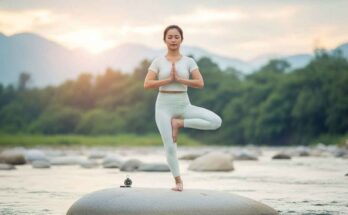
- Tree Pose (Vrksasana): Balance on one foot, place other sole on inner thigh or calf (not knee). Hands at heart or overhead. Steady gaze aids concentration.
- Child’s Pose (Balasana): Knees wide, big toes touch, torso folds forward, arms extended. Surrender here for instant reset.
Full-Body Integrators:
- Sun Salutation A (Surya Namaskar A): A 12-pose cycle: Mountain to forward fold, half lift, plank, cobra/up dog, down dog, then reverse. Repeat 3-5 times for warm flow.
- Seated Twist (Ardha Matsyendrasana): Legs crossed, one foot outside opposite knee, twist toward bent knee. Wring out spine gently.
- Corpse Pose (Savasana): Lie flat, palms up, eyes closed. Scan body for release. Essential for absorbing practice’s gifts.
These aren’t exhaustive, but they’re foundational. Always prioritize form over depth: Engage your core, breathe steadily, and exit if pain (not discomfort) arises.
Sample Sequences for Each Week
Week One Sample (20 minutes): Grounding Flow
- Warm-up: 5 seated breaths, cat-cow on all fours.
- Main: 3 rounds Sun Salutation A (modified, no chaturanga). Hold mountain 1 minute, child’s pose 2 minutes.
- Cool-down: Seated forward fold 3 minutes, savasana 5 minutes.
- Reflect: Note one sensation of stability.
Week Two Sample (30 minutes): Strength Surge
- Warm-up: Arm swings, gentle squats.
- Main: 5 Sun Salutations, intersperse with plank (20 seconds) and warrior II (30 seconds per side).
- Cool-down: Low lunge hip flexor stretch, seated twist 1 minute each side.
- Reflect: What power did you tap today?
Scale up similarly: Week three adds tree pose between warriors; week four layers pigeon after flows.
These sequences are starters, customize by swapping poses to match goals, like extra twists for digestion woes.
Tools and Tips for Success
Sustaining 30 days demands more than willpower; smart tools and habits seal the deal.
Must-Have Props and Resources
Invest minimally: A non-slip mat for grip, yoga blocks for support in folds, a strap for binds if shoulders are snug. Free apps like Insight Timer offer guided sessions; Down Dog generates endless custom flows based on your mood.
Journaling elevates it: Post-practice, log poses, energy levels, and insights. “Felt wobbly in tree, but breath steadied me.” This builds a narrative of growth.
Overcoming Common Pitfalls
Question: “What if I miss a day?” Grace over guilt. Resume without judgment; one skip doesn’t derail. Another hurdle: Boredom. Rotate music playlists or outdoor spots for novelty. Overdoing it? Scale back if soreness screams. Hydrate, eat nourishing foods, and sleep well; yoga amplifies when supported.
Community helps too. Share progress on social media or join online challenges for accountability. Remember, consistency trumps intensity, every minute counts.
Tracking Progress and Adjusting Your Flow
The beauty of custom routines lies in adaptability. Mid-month, review: Can you hold plank longer? Do you breathe easier? Metrics vary: Measure forward fold distance weekly, or rate stress on a 1-10 scale pre- and post-practice.
If goals shift, pivot. Pregnancy surprise? Soften to prenatal mods. Sudden motivation spike? Add acro-yoga elements. Post-30 days, extend or evolve: Perhaps a 60-day sequel with partner poses.
This isn’t a finish line; it’s a lifelong current. Celebrate milestones, like treating yourself to a new mat after week four.
In wrapping up, crafting your 30-day yoga routine is an act of self-kindness, a deliberate weave of body, breath, and intention. You’ve got the blueprint now: Assess, design, practice, refine. Roll out that mat today, and watch your flow unfold. Namaste.
FAQ
How much time should I commit daily to a 30-day yoga routine?
Aim for 20-45 minutes, depending on your week and energy. Beginners start shorter to build habit; consistency matters more than duration.
What if I don’t have space or equipment for yoga at home?
No worries, many poses need just a 6×6 foot area. Use household items like towels for straps or walls for balance support. Outdoor parks work great too.
Can this routine help with specific issues like back pain?
Yes, but tailor it. Include cat-cow and bridge pose for relief, but consult a professional for chronic pain. Always modify to avoid strain.
Is it okay to practice yoga every day, or do I need rest?
Rest actively every 2-3 days with gentle yin or walking. Full recovery prevents injury and sustains long-term enthusiasm.
How do I stay motivated through the full 30 days?
Set micro-rewards, like herbal tea post-session. Pair with a buddy for check-ins, and visualize end-goal benefits to fuel your fire.