
You’re rocking your baby at 3 a.m. again. The drool won’t stop. Those chubby cheeks feel warm to the touch. Suddenly your mind jumps to one scary question: is this teething fever?
Every parent in the US or UK has been there. Teething hits hard, and the worry kicks in even harder. You just want clear answers so you can help your little one without guessing.
The truth might surprise you. Teething rarely causes a real fever. But understanding the difference brings real peace of mind. Let’s walk through exactly what’s normal, what isn’t, and how you can soothe your baby safely.
Understanding Baby Teething Symptoms – What’s Really Happening
Teething usually starts between four and seven months, though some babies surprise you earlier or later. Those first bottom front teeth often lead the way, followed by the rest over the next couple of years.
You’ll notice the classic signs quickly. Excessive drooling turns shirts into bibs. Your baby chews on everything—fingers, toys, your shoulder. Gums look swollen and red, sometimes with a tiny white spot where the tooth is pushing through.
Irritability spikes too. One minute your little one plays happily; the next they’re cranky and rubbing their ears or face. Sleep gets disrupted because discomfort feels worse at night. Appetite for solids might dip, but they still want to nurse or bottle-feed.
These baby teething symptoms usually last just a few days before and after each tooth appears. Every child reacts differently. Some sail through with barely a whimper. Others feel every bit of pressure.
Keep a simple journal if it helps. Note the date, drool level, and any new behaviors. It turns a tough phase into something you can track and even smile about later when those pearly whites finally show up.
The Truth About Teething Fever – Myth or Reality?
Here’s the big question every parent asks: does teething cause fever? The short answer is no. Not a true one anyway.
Pediatric experts from the American Academy of Pediatrics and the NHS agree on this. Teething might cause a very slight rise in temperature—think under 100.4°F (38°C). That low-grade warmth comes from inflamed gums, not an infection.
Anything at 100.4°F or higher is almost never teething fever. It usually signals a cold, ear infection, or virus—common at this exact age. Blaming teething fever can mean missing real issues that need attention fast.
I once helped a mom in New York whose eight-month-old had what she swore was teething fever. After two rough nights she finally checked the thermometer properly. The reading was 101°F. Turned out to be a mild ear infection caught early. A quick visit brought relief and antibiotics when needed.
Always trust the numbers over old stories. Use a reliable rectal or underarm thermometer for babies. And remember—teething fever as a high-temperature label is mostly a myth that’s been passed down for generations.
How to Spot the Difference Between Teething and Real Illness
You know your baby best. That gut feeling matters. So how do you tell normal teething discomfort from something more?
Look beyond temperature. True teething brings drooling, gum-rubbing, and crankiness—but your baby stays alert and feeds okay overall. A slight warm forehead might appear, yet they still smile between fusses.
Red flags mean it’s time to act. High fever lasting over a day. Runny nose or cough. Diarrhea or vomiting. Extreme sleepiness or refusal to drink. These don’t come from teething alone.
For newborns under three months, any fever at all means calling the doctor immediately—US or UK guidelines are crystal clear on this. Older babies? Watch how they act. If they seem miserable despite your best soothing efforts, don’t wait.
A quick pediatrician visit gives answers fast. Many parents tell me they felt silly calling, but every single one left relieved. Better safe than sorry when your baby can’t tell you what hurts.
Safe and Effective Teething Pain Relief Tips for Parents
You don’t have to suffer in silence alongside your baby. Plenty of gentle teething pain relief options actually work.
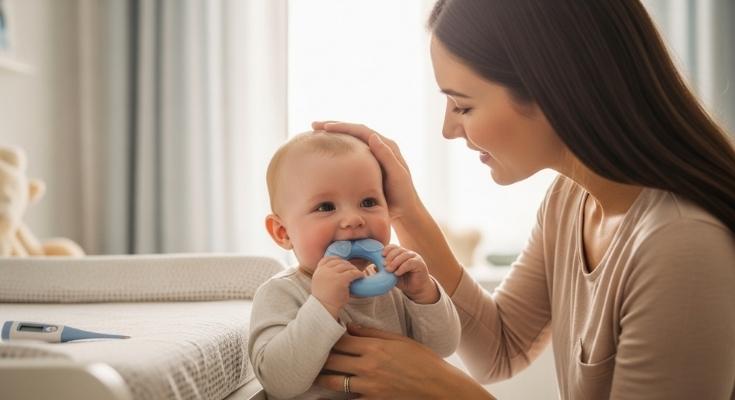
Start simple. Wash your hands and gently massage those sore gums with a clean finger. Many babies calm right down from the pressure and your touch. Offer a chilled (not frozen) silicone teething ring straight from the fridge. The cool texture soothes without any risk.
Over-the-counter relief helps too. Acetaminophen or ibuprofen in the right dose can ease pain and that mild warmth. Always double-check with your pediatrician first and use the syringe that comes with it for accuracy. Skip aspirin completely and avoid numbing gels with benzocaine—they carry real safety concerns.
Keep drool under control to prevent chin rashes. A soft cloth wiped gently does wonders. Dress your baby in soft, breathable layers so they stay comfortable day and night.
Avoid amber necklaces or anything small enough to choke on. Stick with doctor-approved methods and you’ll both get through this stage stronger.
When to Call the Doctor – Don’t Second-Guess Yourself
Some moments require professional eyes. Trust that instinct.
Call right away if fever climbs above 100.4°F, especially with other symptoms. Persistent crying that nothing soothes. Trouble feeding or sleeping for days. Any sign of dehydration like fewer wet diapers.
In the UK, NHS 111 offers quick advice 24/7. In the US, your pediatrician’s after-hours line works wonders. Early calls prevent bigger problems.
Most teething phases pass without drama. But knowing when to reach out keeps your baby safe and you confident.
Conclusion
Teething brings plenty of drool and fussiness, but it doesn’t usually bring a real fever. Understanding teething fever myths versus facts lets you respond with calm confidence.
Use the soothing tips here. Track symptoms closely. And never hesitate to call your pediatrician when something feels off. Your baby will flash that first smile with new teeth before you know it.
Ready to help another parent? Share your own teething stories in the comments below. We’re all in this together.
FAQ
Can teething really cause a fever over 100.4°F?
No. True fevers that high almost always come from infection, not teething. Check with your doctor.
How long do teething symptoms usually last?
Typically three to five days around each tooth. Some babies feel it longer, but it does pass.
What’s the safest teething pain relief for babies?
Chilled teething rings, gentle gum massage, and doctor-approved pain relievers like acetaminophen. Skip gels and necklaces.
Should I worry about diarrhea during teething?
Diarrhea isn’t caused by teething. Contact your pediatrician to rule out other causes.
When do most babies get their first tooth?
Between four and seven months is most common, but anywhere from three to twelve months is normal.