In a world that moves at breakneck speed, where notifications ping endlessly and to-do lists grow like weeds, finding a moment of true calm can feel like chasing a mirage. But what if the key to unlocking that serenity was as simple as the air you breathe? Enter Ujjayi Pranayama, a gentle yet powerful breathing technique from the ancient traditions of yoga. Often called the “victorious breath” or “ocean breath,” Ujjayi invites you to harness your breath not just for survival, but for transformation.
For beginners dipping their toes into yoga or mindfulness, breathwork might seem abstract or intimidating. Why focus on something as automatic as breathing? The truth is, most of us breathe shallowly, reacting to stress with quick, erratic inhales that keep our nervous systems in overdrive. Ujjayi flips the script. It teaches you to slow down, create a rhythmic flow, and build an internal anchor. This isn’t about forcing perfection; it’s about rediscovering the rhythm of life through your lungs.
In this guide, we’ll explore Ujjayi Pranayama from the ground up. You’ll learn what it is, why it matters for newcomers, how to practice it safely, and ways to weave it into your everyday chaos. By the end, you’ll have actionable tools to start today, plus answers to those nagging questions that keep beginners up at night. Let’s dive in, one breath at a time.
What is Ujjayi Pranayama?
At its core, Ujjayi Pranayama is a pranayama technique, where “prana” means life force or vital energy, and “ayama” refers to expansion or control. It’s one of the foundational breaths in Hatha and Vinyasa yoga, designed to regulate the flow of energy while grounding the mind. Unlike more advanced practices that involve breath holds or rapid alternations, Ujjayi is accessible, focusing on a subtle constriction in the throat to produce a soft, soothing sound.
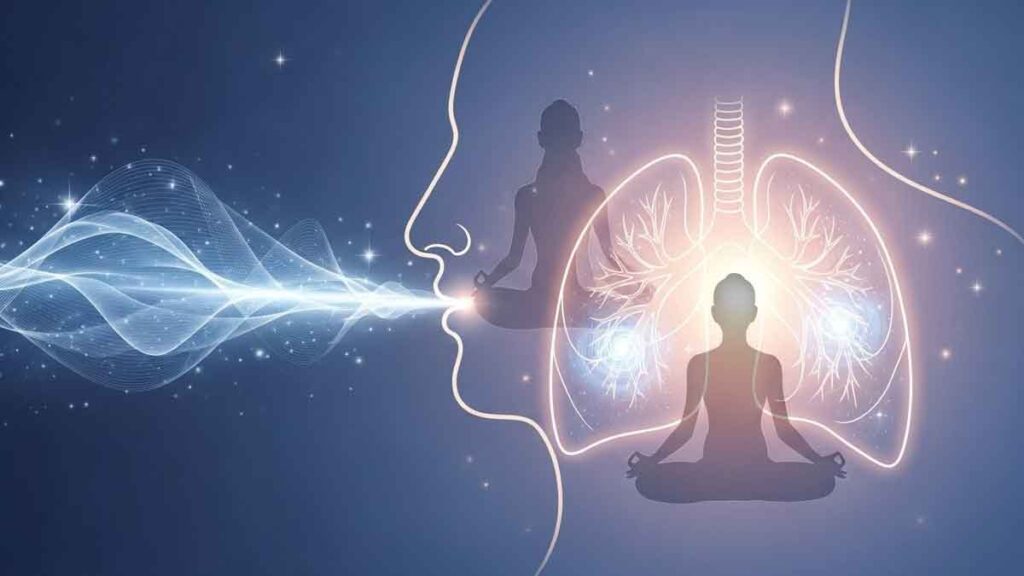
Imagine the gentle rush of waves lapping at the shore, or the whisper of wind through distant trees. That’s the signature of Ujjayi: a low, oceanic hum created as air passes through a slightly narrowed glottis (the space at the back of your throat). This isn’t a forced growl or dramatic roar; it’s an effortless murmur that syncs with your inhales and exhales, both done through the nose.
Historically, Ujjayi traces its roots to ancient yogic texts like the Hatha Yoga Pradipika, where it’s praised for balancing the body’s subtle energy channels, or nadis. In modern terms, it’s a biofeedback tool. The sound gives your brain something tangible to latch onto, pulling you out of mental loops and into the present. For beginners, this makes it a gateway breath: simple enough to learn in minutes, profound enough to evolve with your practice.
What sets Ujjayi apart from everyday breathing? Intention. You’re not just inhaling oxygen; you’re cultivating awareness. Over time, this builds resilience against stress, turning your breath into a portable meditation. If you’ve ever felt scattered during a yoga class or workday, Ujjayi offers a reset button, one wave at a time.
The Benefits of Ujjayi for Beginners
Why bother with a fancy breathing exercise when deep breaths already feel good? Ujjayi amplifies those basics, delivering layered benefits that touch body, mind, and beyond. For newcomers, it’s especially valuable because it starts small, building confidence without overwhelming the system. Let’s break it down.
Physical Benefits
Your body thrives on steady oxygen delivery, and Ujjayi excels here. The controlled constriction warms the breath, which can ease tension in the chest and lungs, making it a natural ally for those with mild respiratory hiccups like seasonal allergies or stuffy sinuses. Research in yogic physiology suggests it strengthens the diaphragm and intercostal muscles, improving lung capacity over weeks of consistent practice. Beginners often notice better posture too, as the rhythmic flow encourages an upright spine, countering the slouch from desk life.
One standout perk is its role in supporting physical activity. If you’re new to yoga flows or even walking meditations, Ujjayi helps regulate heart rate, preventing that gasping fatigue. It also aids digestion subtly, by massaging abdominal organs through even pressure, which can soothe bloating or irregularity. Start with five minutes daily, and you might find your energy levels stabilize, trading afternoon crashes for sustained vitality. It’s like giving your engine a tune-up, one inhale at a time.
Mental and Emotional Benefits
Stress is the modern epidemic, and Ujjayi is your quiet rebellion. By engaging the vagus nerve through slow, deliberate breaths, it shifts your autonomic nervous system from fight-or-flight to rest-and-digest. Beginners report quicker access to calm during anxious moments, like before a big meeting or after a tough commute. The audible cue of the breath acts as a mantra, drowning out racing thoughts and fostering focus.
Emotionally, it’s a stabilizer. That oceanic sound? It creates a sensory loop, much like ocean waves lulling you to sleep, which can ease insomnia or restless evenings. Over time, regular practice cultivates emotional resilience, helping you observe feelings without getting swept away. Imagine facing a heated argument not with a sharp retort, but a steady exhale that diffuses the fire. For beginners, this builds self-trust: proof that you can influence your inner world with something as free as air.
Energetic and Subtle Benefits
Yoga views breath as the bridge to prana, the subtle energy that animates us. Ujjayi gently clears blockages in the nadis, promoting a sense of flow that feels like untangling invisible knots. Beginners might sense this as heightened intuition or a “beginner’s mind” freshness, where creativity sparks more easily. It’s not woo-woo; it’s the brain’s alpha waves kicking in, enhancing problem-solving by quieting the inner critic.
On a deeper level, Ujjayi fosters longevity by slowing the breath rate, which correlates with lower metabolic stress. Ancient sages linked it to extended vitality, and modern studies echo this with reduced inflammation markers. For those new to energy work, it’s a low-stakes entry: no crystals required, just your breath revealing layers of aliveness you didn’t know were there.
Step-by-Step Guide to Practicing Ujjayi
Ready to try? Ujjayi shines in its simplicity, but beginners benefit from a structured approach. Find a quiet spot, sit tall on a chair or cushion with your spine neutral, and let’s begin. Aim for 5-10 minutes to start, building as comfort grows.
Getting Started: Building the Foundation
First, warm up with normal nasal breathing. Close your eyes, place one hand on your belly and one on your chest. Inhale deeply through your nose for a count of four, feeling the belly rise first, then the chest. Exhale for four, reversing the motion. Do this for a minute to center yourself. This diaphragmatic base ensures Ujjayi feels supportive, not strained.
Creating the Sound: The Ocean Whisper
Now, the magic. With your mouth open, exhale slowly as if fogging a mirror or whispering “ha” from the back of your throat. Notice the soft rush? That’s the constriction: a gentle narrowing of the glottis, like sipping through a straw, but relaxed. Inhale the same way, creating a continuous whoosh. Once comfortable, seal your lips and switch to nasal breathing, keeping the throat’s gentle squeeze. The sound should be audible to you but not your neighbor, a private symphony of in and out.
Breathe in a 1:1 ratio: equal length inhales and exhales, around 4-6 counts each. No holds yet; that’s for later levels. If the sound fades, soften your jaw and visualize waves rolling in and out. Pro tip: Record yourself briefly to check the tone, ensuring it’s smooth, not gritty.
Refining Your Practice: Cycles and Closure
Complete 10-20 cycles, then release. Open your mouth for a few natural breaths, sighing out any residue. Scan your body: Where do you feel lighter? Journal this to track progress. For variety, pair it with gentle neck rolls or seated twists, letting the breath guide the movement.
Practice daily, ideally morning or evening, when your mind is malleable. Apps with timers can help, but soon, you’ll crave the ritual.
Common Pitfalls and How to Avoid Them
Even pros stumble with Ujjayi, so beginners, take heart: awareness is half the fix. One frequent slip is over-constricting the throat, turning the breath raspy and dry. Solution? Soften the effort; aim for a feather-light touch, using the soft palate more than a hard squeeze. If dryness hits, sip water post-practice and ease up.
Another trap: nostril flaring or sucking in air, which signals shallow chest breathing. Counter this by anchoring your awareness to the belly’s rise, keeping nostrils relaxed like open doors. Beginners often rush the pace too, losing the rhythm. Slow it down, even if cycles shorten, quality trumps quantity.
Finally, forcing the sound can breed frustration. Remember, it’s a guide, not the goal. If it doesn’t hum today, that’s fine; return to silent nasal breaths. Listen to your body: If tension builds, pause. With patience, these hiccups become teachers, refining your flow.
Integrating Ujjayi into Your Daily Routine
Ujjayi isn’t confined to the mat; it’s a lifestyle hack. Start your day with three minutes in bed, syncing breath to wake-up stretches. During commutes, use it discreetly to buffer road rage, turning traffic into a floating meditation. At work, a quick desk session mid-afternoon can recharge focus, especially before emails.
Pair it with walks: Match steps to breaths for grounded movement. Evening wind-downs amplify its sleep magic, easing into bed with 10 cycles. For beginners, set micro-reminders, like linking it to coffee sips or light switches. Over time, it becomes second nature, a thread weaving calm through chaos.
When and Where to Practice
Timing matters. Mornings energize, clearing mental fog; evenings unwind, signaling rest. Avoid heavy meals before or intense workouts during, as they disrupt flow. Spaces? Any quiet corner works: a park bench for nature synergy, or your shower for steamy amplification (the humidity softens the throat).
Seasonally, lean in during stress peaks, like holidays. If traveling, it’s your constant companion, no gear needed. Listen inwardly: When anxiety knocks, that’s your cue.
FAQ
What if I can’t make the ocean sound?
That’s common for beginners. Focus on the sensation of gentle throat engagement rather than perfection. Practice with mouth open first, then transition. It may take days; persistence pays off.
Is Ujjayi safe for everyone?
Generally yes, but skip if you have acute respiratory issues like severe asthma, or during pregnancy without guidance. Those with high blood pressure or anxiety should start slow and consult a teacher.
How long until I notice benefits?
Many feel calmer after one session, but consistency shines: Aim for daily practice. Physical perks like better lung function emerge in 2-4 weeks; mental clarity builds steadily.
Can I combine Ujjayi with other yoga styles?
Absolutely. It’s a staple in Vinyasa for flow syncing, or restorative for deep holds. In meditation, it anchors wandering minds. Experiment mindfully.
What’s the difference between Ujjayi and other pranayamas?
Ujjayi emphasizes the throat sound for focus, unlike alternate nostril (Nadi Shodhana) for balance or bellows breath (Bhastrika) for energizing. It’s versatile, bridging them all.
There you have it: Breath as your superpower, unlocked through Ujjayi. Start small, stay curious, and watch how this simple practice ripples into profound change. Your first victorious wave awaits. What’s one breath you’ll take today?