After pushing your body through a grueling workout, that familiar ache can creep in, turning what should be a sense of accomplishment into a reminder of overexertion. Delayed Onset Muscle Soreness, or DOMS, hits hardest 24 to 48 hours later, leaving you stiff, tender, and reluctant to lace up your sneakers again. But here’s the good news: you don’t have to resign yourself to days of discomfort. Incorporating targeted stretches into your post-workout routine can significantly reduce soreness, speed up recovery, and keep you moving toward your fitness goals without interruption.
Stretching after exercise isn’t just a feel-good ritual; it’s a science-backed strategy. When you work out, your muscles shorten and tighten under tension. Static stretching post-session helps elongate those fibers, improve blood flow, and flush out metabolic waste like lactic acid buildup. Studies from the American Council on Exercise show that regular stretching can decrease muscle stiffness by up to 20 percent and enhance flexibility over time. The key is consistency and proper form: hold each stretch for 20 to 30 seconds, breathe deeply, and never push to the point of pain.
In this article, we’ll dive into why recovery matters, then break down five essential stretches that target the most common sore spots. These aren’t generic poses; they’re selected for their accessibility, effectiveness across workout types (from cardio to strength training), and ability to address full-body tension. Whether you’re a beginner or a seasoned athlete, these moves will help you bounce back faster. Let’s get into it.
Why Post-Workout Stretching Beats Soreness
Before jumping into the stretches, it’s worth understanding the recovery puzzle. Your body repairs micro-tears in muscle fibers during rest, but without active intervention, inflammation can linger. Stretching promotes circulation, delivering oxygen and nutrients while removing toxins. It also signals your nervous system to relax, lowering cortisol levels that otherwise prolong fatigue.
Timing is crucial: aim to stretch within 10 to 15 minutes after cooling down. This window maximizes pliability when muscles are warm. Pair it with hydration, protein-rich snacks, and sleep for a powerhouse recovery trio. Common pitfalls? Rushing through stretches or skipping them altogether. Take your time; even five minutes can make a difference. Now, let’s explore the stretches that will become your go-to allies.
The Top 5 Stretches for Post-Workout Relief
These five stretches cover major muscle groups: legs, hips, back, chest, and shoulders. Perform them in sequence for a full routine, or pick two to three based on your session’s focus. Use a mat for comfort, and remember: ease in gently.
1. Standing Forward Fold for Hamstrings and Lower Back
The standing forward fold is a powerhouse for releasing the posterior chain, those hamstrings and calves that scream after runs or squats. Tight hamstrings pull on your lower back, amplifying soreness, so this stretch unwinds both.
How to Do It:
- Stand tall with feet hip-width apart, knees slightly bent to protect your joints.
- Inhale deeply, then exhale as you hinge at your hips and fold forward, letting your upper body drape over your legs.
- Let your arms hang loose or grasp opposite elbows for a deeper pull. If flexibility is limited, bend your knees more generously.
- Hold for 20 to 30 seconds, breathing slowly through your nose.
Benefits: This inversion boosts blood flow to the brain and extremities, reducing inflammation. It eases sciatic nerve tension, a frequent culprit in post-leg-day woes, and can cut recovery time by improving lymphatic drainage.
Pro Tips: Avoid locking your knees; a micro-bend keeps the stretch sustainable. For added intensity, sway side to side to massage the IT band. Common mistake: rounding your back too much, which strains the spine. Keep it neutral by gazing at your shins.
Incorporate this after lower-body days, and you’ll notice looser strides by morning.
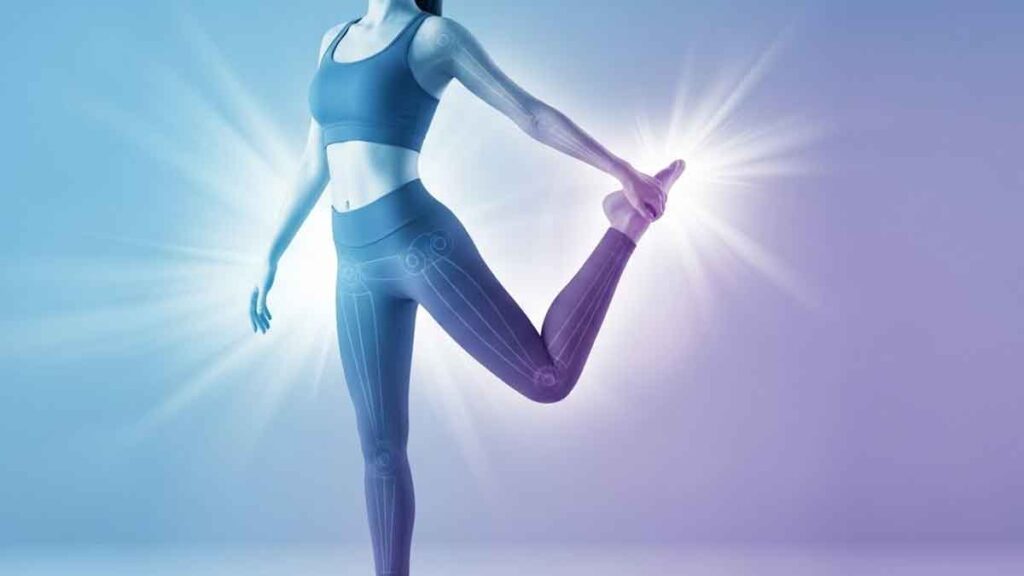
2. Quad Stretch at the Wall for Front Thighs
Quads take a beating in cycling, jumping, or any explosive movement. This wall-assisted version prevents imbalance by stretching one leg at a time, ensuring even recovery.
How to Do It:
- Face a wall and place your right hand on it for balance, feet about a foot away.
- Bend your right knee, bringing your heel toward your glutes, and grab your ankle with your right hand.
- Keep your knees aligned and pelvis tucked to avoid arching your lower back.
- Press your left hip forward slightly for a gentle hip flexor bonus. Hold for 20 to 30 seconds, then switch sides.
Benefits: Quads shorten during knee extension exercises, leading to anterior pelvic tilt and back pain if ignored. This stretch restores length, enhances knee stability, and can prevent runner’s knee by balancing quad dominance over hamstrings.
Pro Tips: Use a strap or towel if reaching your ankle feels impossible. Focus on squeezing your glutes to deepen the pull without straining. A frequent error is letting the stretched knee drift outward; alignment is key to avoiding hip tweaks.
Runners and HIIT enthusiasts, make this non-negotiable. It not only curbs soreness but also preps you for better form next session.
3. Figure-Four Stretch for Hips and Glutes
Hip tightness from sedentary days or heavy lifts compounds workout fatigue. The figure-four targets the gluteus medius and piriformis, often overlooked muscles that refer pain to the lower back.
How to Do It:
- Lie on your back with knees bent, feet flat on the floor.
- Cross your right ankle over your left thigh, just above the knee, creating a “4” shape.
- Thread your hands through the opening and clasp the back of your left thigh, pulling it toward your chest.
- Keep your head and shoulders grounded. Hold for 20 to 30 seconds, then repeat on the other side.
Benefits: This releases deep hip rotators, improving mobility and reducing that “locked-up” feeling after squats or deadlifts. Research from the Journal of Physical Therapy Science links hip flexibility to lower injury rates, making it a preventive gem.
Pro Tips: For a seated variation, cross the ankle over the opposite knee while perched on a chair edge. Breathe into the stretch to relax the piriformis muscle. Watch out for forcing the pull; if you feel pinching, ease off and consult a pro for underlying issues.
Desk workers turned weekend warriors will love how this erases that post-gym grind from prolonged sitting.
4. Doorway Chest Opener for Upper Body Tension
Upper-body workouts like push-ups or bench presses leave pecs and shoulders knotted. This simple doorway move counters forward hunching, a posture thief that worsens soreness.
How to Do It:
- Stand in a doorway with arms bent at 90 degrees, forearms on the frame, elbows at shoulder height.
- Step forward with one foot, letting your chest lead as you gently press into the stretch.
- Keep your shoulders down, away from your ears, and core engaged.
- Hold for 20 to 30 seconds, then step back and shake out your arms.
Benefits: Tight chests pull shoulders inward, straining the upper back and neck. Opening them enhances posture, boosts lung capacity for better endurance, and alleviates tension headaches tied to workout stress.
Pro Tips: Adjust elbow height lower for a shoulder focus or higher for triceps. Pair with deep belly breaths to oxygenate tight tissues. A common blunder is overarching the back; maintain a neutral spine to protect your lumbar area.
After chest or cardio days, this stretch feels like a reset button for your entire upper frame.
5. Seated Spinal Twist for Core and Back Release
Core work and rotational sports demand a twist to unwind the obliques and erector spinae, preventing that twisted-towel sensation in your midsection.
How to Do It:
- Sit tall on the floor with legs extended, then bend your right knee and cross it over your left leg, foot flat outside the thigh.
- Place your left elbow outside your right knee and right hand behind you for leverage.
- Inhale to lengthen your spine, exhale to twist gently toward the right, gazing over your shoulder.
- Hold for 20 to 30 seconds, then switch directions.
Benefits: Twists wring out spinal fascia, promoting detoxification and easing rotational soreness from tennis or golf swings. They also improve digestion, a bonus for post-protein shake bloating, and foster symmetry to dodge imbalances.
Pro Tips: Sit on a folded blanket if your hips are tight. Use your breath as an anchor: twist deeper on each exhale. Avoid if you have recent spinal injuries; opt for a gentler supine version instead.
This closer ties everything together, leaving you elongated and centered.
Building a Recovery Habit That Sticks
Mastering these stretches is step one; integration is the game-changer. Dedicate 10 minutes post-workout, tracking progress in a journal: note soreness levels pre- and post-routine. Combine with foam rolling for myofascial release or contrast showers (hot then cold) to amplify effects. Listen to your body; if pain persists beyond 72 hours, seek professional advice to rule out strains.
Recovery isn’t downtime; it’s earned time. By prioritizing these stretches, you’re investing in longevity, turning fleeting motivation into sustainable strength. Your future self, sore-free and energized, will thank you.
FAQ: Your Post-Workout Stretching Questions Answered
How long should I hold each stretch to maximize benefits?
Aim for 20 to 30 seconds per side, repeating 2 to 3 times if time allows. This duration allows muscles to adapt without triggering protective tightening. Shorter holds work for quick sessions, but longer ones yield better flexibility gains over weeks.
Can I stretch if I’m already feeling sore the next day?
Yes, light stretching on rest days can help, but keep it gentle to avoid aggravating inflammation. Focus on breath-led movements rather than deep pulls. If soreness is sharp or one-sided, rest fully and consider ice or professional input.
What’s the difference between static and dynamic stretches for recovery?
Static stretches, like the ones here, are held without movement and ideal post-workout for lengthening. Dynamic ones involve swinging limbs and suit warm-ups. Mixing both prevents overuse injuries, but save static for cooldowns.
Do these stretches work for all workout types, like yoga or swimming?
Absolutely, with tweaks. Yoga enthusiasts might extend holds for mindfulness, while swimmers could emphasize shoulder openers. The principles remain: target worked muscles to enhance circulation and reset posture.
How soon after starting a new routine will I notice less soreness?
Most people feel relief within a week of consistent use, with noticeable flexibility boosts in 2 to 4 weeks. Factors like hydration, nutrition, and sleep accelerate results. Patience pays off; track small wins to stay motivated.