In our fast-paced world, it’s easy to overlook the quiet hero of our daily movements: the spine. This incredible structure supports our upright posture, protects our nervous system, and enables everything from a simple reach for the coffee mug to a spontaneous dance in the kitchen. Yet, with hours spent hunched over desks, scrolling through phones, or navigating the stresses of life, spinal stiffness sneaks up on us. The result? That nagging tightness in the lower back, restricted turns, or the subtle ache that reminds us we’re not as bendy as we once were.
The good news is that you don’t need extreme contortions or gym memberships to reclaim your spinal suppleness. Gentle, intentional movements can make a world of difference, fostering flexibility that feels natural and sustainable. In this post, we’ll explore why prioritizing your spine pays off and dive into four easy-to-follow moves designed for beginners or anyone seeking low-impact relief. These aren’t flashy exercises; they’re thoughtful practices rooted in mindful body awareness. By the end, you’ll have a toolkit to weave into your routine, plus answers to those burning questions about back health. Let’s loosen up and get moving.
Why Spinal Flexibility Matters for Your Overall Well-Being
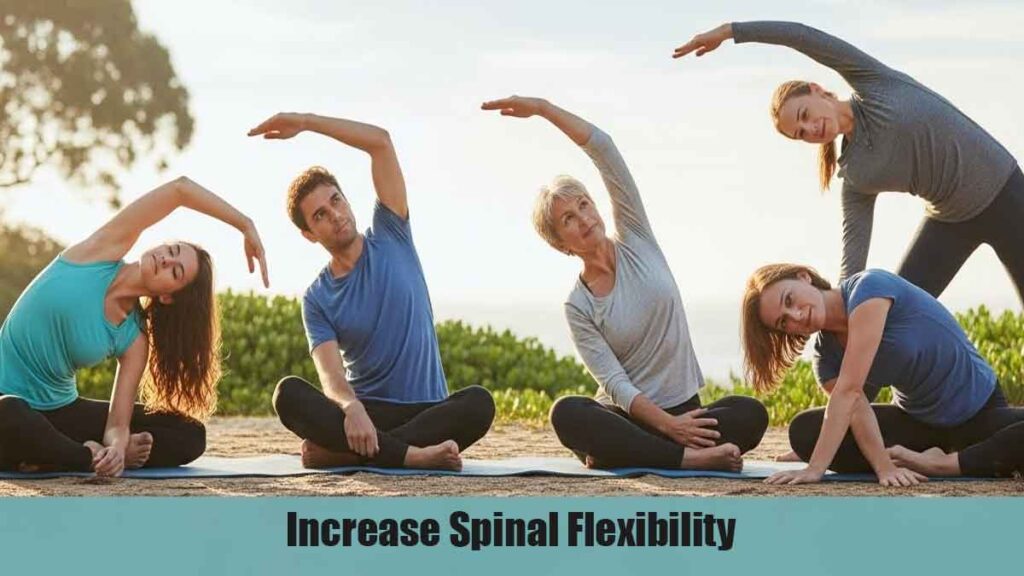
Your spine isn’t just a stack of bones; it’s a dynamic column made up of 33 vertebrae, cushioned by discs and stabilized by muscles and ligaments. When flexible, it absorbs shocks, distributes weight evenly, and allows fluid rotation and bending. But when it tightens, problems cascade.
Consider the ripple effects of poor flexibility. Tight spinal muscles can pull on surrounding tissues, leading to imbalances that strain the hips, shoulders, and even neck. Over time, this contributes to chronic issues like lower back pain, which affects up to 80% of adults at some point. It hampers posture, making you slouch and compressing organs, which can subtly affect breathing and digestion. On the flip side, a supple spine enhances mobility, reducing injury risk during everyday activities like gardening or playing with kids.
Flexibility also ties into mental health. Practices that encourage spinal movement often incorporate breathwork, promoting relaxation and stress reduction. Studies from fields like physical therapy show that regular mobility work can lower cortisol levels and boost endorphins, creating a virtuous cycle of physical ease and emotional calm.
Common culprits for stiffness include prolonged sitting (hello, remote work), repetitive motions from jobs or hobbies, and the natural wear of aging, where discs lose hydration. Dehydration, poor sleep, and inadequate core strength exacerbate it too. The silver lining? Consistency trumps intensity. Even 10 minutes a day of targeted moves can hydrate those discs, lengthen muscles, and restore range of motion. If you’re dealing with acute pain or conditions like herniated discs, consult a healthcare pro first, but for most, these gentle shifts offer real, preventive power.
Preparing Your Body for Gentle Spinal Work
Before jumping into the moves, set the stage for success. Start with a simple warm-up to awaken your body without strain. Stand tall and roll your shoulders back five times, then gently swing your arms side to side like a loose pendulum. Add a few deep belly breaths: inhale for four counts, expanding your ribs, and exhale for six, feeling your spine settle.
Timing matters. Morning sessions chase away overnight stiffness, while evenings unwind the day’s tension. Aim for a quiet space with a yoga mat or soft carpet; props like a folded blanket or cushion can support comfort. Hydrate well, as water keeps spinal discs plump. Listen to your body: if a move pinches or sharpens pain, ease off or skip it. Progress slowly; flexibility builds over weeks, not overnight. Track how you feel in a journal to celebrate small wins, like easier reaches or lighter steps.
The 4 Gentle Moves to Boost Spinal Flexibility
These four moves draw from principles of yoga and physical therapy, emphasizing controlled, breath-synchronized motions. Each targets different spinal segments: forward bends for the lower back, twists for rotation, extensions for openness, and neutral holds for stability. Perform them in sequence, holding or repeating as noted, for a 15-20 minute flow. Breathe deeply throughout; let exhales guide the release.
Move 1: Seated Forward Fold with a Twist
This hybrid move gently elongates the entire spine while introducing a subtle rotation to unlock side-to-side mobility. It’s perfect for desk-bound folks craving relief without floor work.
Step-by-Step Instructions:
- Sit on the floor with legs extended straight ahead, feet flexed. If hamstrings feel tight, bend your knees slightly or sit on a cushion to tilt your pelvis forward.
- Inhale, lengthening your spine tall like a string pulls the crown of your head upward.
- Exhale, hinge at your hips to fold forward, reaching arms along your legs or toward your feet. Let your head and neck relax down.
- Once folded (or as far as comfy), place your right hand on your left knee and left hand behind you on the floor. Inhale to lift slightly, then exhale to twist your torso right, gazing over your right shoulder. Keep the twist gentle; it’s about sensation, not force.
- Hold for three breaths, then switch sides. Return to center, roll up vertebra by vertebra, stacking your spine.
Benefits and Insights: The forward fold decompresses lumbar discs, easing pressure that builds from sitting. The twist mobilizes thoracic vertebrae, often the stiffest zone, improving posture and digestion by massaging abdominal organs. Expect a mild stretch in the back body; over time, this counters the forward slump of modern life, enhancing balance and reducing fall risk.
Tips for Success: If seated feels challenging, do this in a chair: feet flat, fold over thighs, and twist with one hand on the opposite knee. Repeat 3-5 times per side, building to longer holds. Common question: Does it hurt my knees? Not if you prop up; focus on the spine, not the bend.
Move 2: Kneeling Cat-Cow Flow
A classic for a reason, this undulating sequence mimics a cat’s arch and cow’s sway, warming and lubricating the full spinal column with minimal equipment.
Step-by-Step Instructions:
- Start on all fours, hands under shoulders, knees under hips. Spread fingers wide for stability; wrists neutral.
- Inhale deeply, dropping your belly toward the floor, lifting your tailbone and chest forward (Cow). Gaze up softly, feeling your spine curve into a gentle U.
- Exhale fully, rounding your back upward like a Halloween cat, tucking chin to chest and drawing navel to spine (Cat). Imagine threading a needle with your gaze toward your navel.
- Flow between these for 8-10 breaths, syncing movement to breath. Move slowly; it’s a wave from tail to head.
- To finish, rest in neutral table pose for two breaths, feeling the subtle vibrations settle.
Benefits and Insights: Cow opens the front body, countering hunching, while Cat releases the back, flushing out tension. This duo enhances proprioception (body awareness), crucial for preventing tweaks during lifts or turns. It also stimulates cerebrospinal fluid flow, supporting nerve health. Many notice immediate ease in breathing, as the ribcage expands more freely.
Tips for Success: Keep hips level; if wrists ache, fist them or use forearms. Beginners: Do fewer reps. Advanced: Add a side bend by walking one hand out during Cow. Addresses the query: Is this safe post-injury? Yes, if pain-free; it rebuilds control gradually.
Move 3: Supine Spinal Twist
Lying down takes gravity out of the equation, making this an accessible way to wring out the spine like a towel, targeting obliques and erector muscles.
Step-by-Step Instructions:
- Lie on your back, knees bent, feet flat on the floor hip-width apart. Arms extend out to a T, palms up.
- Inhale, then exhale as you drop both knees to the right, letting them stack naturally. Use your left hand to guide if needed, but keep shoulders grounded.
- Turn your head left, opposite the knees, for a full spinal spiral. Breathe here; each exhale deepens the twist slightly.
- Hold 5-8 breaths, then inhale to recenter knees. Switch to the left side.
- End by hugging knees to chest, rocking side to side for a fun release.
Benefits and Insights: This move detoxifies by encouraging lymphatic drainage and eases sciatic nerve irritation through gentle traction. It balances the parasympathetic nervous system, promoting calm after a hectic day. Long-term, it fosters even muscle development, preventing one-sided tightness from habits like always carrying bags on the same shoulder.
Tips for Success: Place a bolster between knees for support if hips are uneven. Avoid if you have fresh spinal surgery. Repeat daily; many ask, “How soon do I feel looser?” Often within a week of consistency.
Move 4: Supported Bridge Lift
A mild backbend that strengthens while stretching, this builds glute and core engagement for spinal support without overextending.
Step-by-Step Instructions:
- Lie on your back, knees bent, feet flat and parallel, hip-distance apart. Heels close to sit bones.
- Place a yoga block or firm pillow under your sacrum (tailbone area) for support; if none, skip to a mini-lift.
- Inhale, pressing feet down to lift hips slightly (1-2 inches if unsupported), creating a gentle arch. Clasp hands under back or rest arms by sides.
- Soften your glutes after lift; focus on lengthening tailbone toward knees. Gaze up, neck long.
- Hold 5 breaths, then lower slowly. Rest, then repeat 3 times.
Benefits and Insights: The lift counters forward folds of daily life, opening the front spine and hip flexors. It bolsters blood flow to the vertebrae, aiding nutrient delivery for disc health. Users often report better walking stride, as it aligns the pelvis-spine junction.
Tips for Success: Start supported to build confidence. If lower back grips, shorten the lift. Ties into: “Will this help my posture?” Absolutely; it retrains neutral alignment.
Weaving These Moves into Your Everyday Rhythm
To maximize gains, integrate rather than isolate. Try a morning mini-flow: Cat-Cow into Twist for wake-up vibes. Evenings suit the full sequence before bed, signaling wind-down. Pair with walks; flexible spines make strides smoother. Track progress weekly: Can you touch toes easier? Rotate further without creaks?
Combine with habits like standing desks or hourly stretch breaks. Nutrition aids too: Omega-3s from fish or nuts reduce inflammation, while collagen-rich bone broth supports tissues. Remember, flexibility is a practice, not a destination. Patience yields resilience.
Extra Strategies for Long-Term Back Vitality
Beyond moves, fortify your spine holistically. Strengthen with planks or bird-dogs to stabilize. Ergonomics count: Adjust chairs for 90-degree knees, screens at eye level. Sleep on your side with a knee pillow to maintain curves. Mindfulness apps with guided sessions amplify benefits.
If stiffness persists, consider a PT eval. Most thrive with these basics, turning vulnerability into vitality.
FAQ: Your Spinal Flexibility Questions Answered
How often should I do these moves? Start with 3-4 times weekly, 10-15 minutes. Build to daily as it feels good. Consistency over marathon sessions wins.
Can these help with sciatica? They may ease symptoms by decompressing nerves, but pair with professional advice. Avoid twists if acute.
What if I’m overweight or have limited mobility? Modify freely: Chair versions or wall support work wonders. Focus on breath; progress follows.
How long until I see results? Subtle shifts in 1-2 weeks; fuller flexibility in 4-6 with regularity. It’s cumulative.
Are there moves to avoid with osteoporosis? Skip deep twists or folds; opt for supported, neutral ones like modified Bridge. Consult your doc.
There you have it: a gentle path to a more fluid spine. Your back carries you through life; give it the care it deserves. Start small today, and watch how a little bend transforms your every step. What’s your first move? Share in the comments below.